A First Week in a New Neighbourhood, Without Filling Every Evening
A first week in a new neighbourhood feels easier with one repeatable route, a useful landmark and room to adjust to a changed routine without rushing.
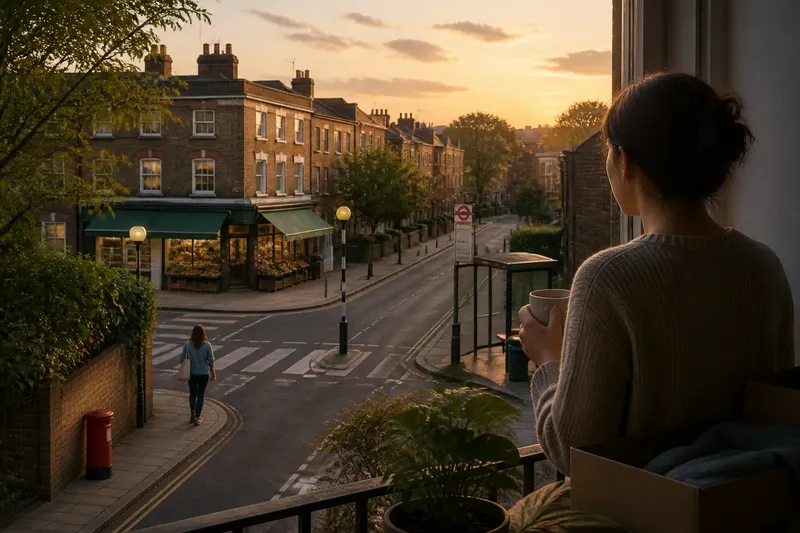
A first week in a new neighbourhood is easier to manage when you choose one repeatable route and leave the rest of the evening open. A new address changes ordinary routines as well as the view from the window; there is no need to turn every outing into proof that you are settling in.
Start with a practical destination, such as a grocer or bus stop, and give yourself permission to come home afterwards. Repetition builds familiarity at a pace that leaves room for unpacking, fatigue and the small emotional adjustments that accompany a move.
Why can settling in feel like another job?
A move creates a run of small unknowns: where to buy milk, which bus serves the area, and whether the corner shop is open. Trying to solve them all at once can make an ordinary walk feel like fieldwork, only with less reliable footwear.
Familiarity is not a task to finish in one ambitious circuit. A full calendar can leave you too tired to notice useful details, such as a well-lit crossing or a bench where you can stop without buying anything. The aim is not to master the neighbourhood; it is to make the next ordinary errand a little more manageable.
Choose one outing that serves a real purpose, such as buying groceries or checking the walk to a bus stop. If you have energy afterwards, continue; otherwise, the errand is enough.
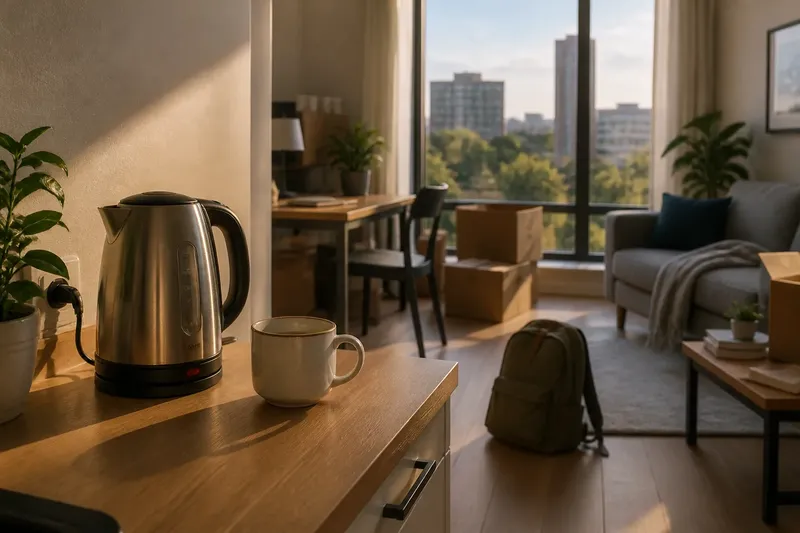
Leave one evening unplanned. Unpacking a mug or eating something familiar may be more useful than another loop around streets you have not yet had time to absorb.
How do you choose a route you will repeat?
Choose a route that is useful before it is interesting. Walk from your front door to a place you already need to reach: a post box, grocer, pharmacy, bus stop or park gate. A practical destination gives the walk a purpose, while repetition gives your memory time to catch up.
Keep the first route simple. Notice a few visible cues, such as a bakery awning, a library crossing or a row of trees. If you use a phone map, check it before setting out and put it away when the route is clear enough to follow. A screen consulted at every corner can make a short walk feel like an exam.
Say you have moved into a flat on a side street and need bread before work. You check a map, choose the grocer route that passes a recognisable corner shop and a marked crossing, then walk it once with the map available. On a later evening, you take the same route without needing bread and notice that the bus stop lies beyond the crossing. The resulting trade-off is modest: you gain a useful point of reference, while leaving other streets unexplored for now.
If a junction feels confusing, return the way you came and try another turn on a different day. Familiarity grows through repetition, not through proving you can improvise.
What makes a landmark useful?
A useful landmark helps you orient yourself or make a decision. A station entrance, public library, supermarket, park gate or clearly marked junction may serve better than a striking building you pass once and cannot place again.
Give the landmark a modest job. It might help you explain where your flat is, decide which way to turn or plan an errand. You do not need to turn it into a social destination. A library can simply be a place to check opening information or sit quietly.
If you are choosing between a large park with several exits and a small shop with a recognisable sign, the shop may be easier to use as a reference. Pick the place that fits your route and daily needs, not the one that seems most impressive.
What should you check before keeping a route?
- Crossing: If the route has a marked crossing you can use comfortably, keep it; if crossing the road feels awkward, choose a calmer street or another marked crossing.
- Lighting and activity: If the route feels comfortable at the time you need it, keep it for that outing; if a stretch feels unsafe, choose a better-lit or busier alternative, travel at another time or use transport.
- Access: If the pavement and entrances suit your mobility, keep the route; if steps, narrow paths or other barriers make it unsuitable, choose an accessible alternative and check local access information.
- Opening arrangements: If the destination is open when you expect to arrive, keep it as your errand stop; if posted hours or notices say otherwise, change the time or choose another destination.
- Wayfinding: If visible cues make the route easy to recognise, repeat it; if junctions remain confusing, use a map before setting out or choose a simpler route.
- Effort: If the walk leaves enough energy for the rest of your day, keep it; if it feels draining, shorten the route or use a nearer destination.
Keep the useful part and discard the rest. If the destination is worth reaching but the walk is not, get there another way.
How can ordinary contact help you feel less new?
Being new can create pressure to prove that you are making an effort. That can turn a trip for milk into a test of whether you can meet someone, remember a name and describe your move neatly. Ordinary contact is less demanding: a nod to the person behind the counter or a brief question about the bus stop can make a street feel less anonymous without demanding instant friendship.
Pauses also let you notice what you need. Sit on a public bench, wait for a bus without filling the time with messages, or stop to check your route. You can then decide whether to continue, turn back or go home.
If a conversation happens naturally, respond as you would elsewhere. If it does not, the walk still counts. Belonging is not a performance measured by how many people you meet.
What if the first week feels out of balance?
What if I feel guilty about staying in?
Staying in after a move can be a sensible response to fatigue, not evidence that you are avoiding the neighbourhood. Choose one small practical outing for another day, then let the evening remain yours.
What if the same route starts to feel repetitive?
Keep the useful destination and change one manageable detail, such as walking the same street in the opposite direction. If that makes the route harder to follow, return to the familiar direction and leave other changes for later.
What if I do not know where to pause?
Try a public place with an obvious reason to be there, such as a park bench or library seating area. If neither feels comfortable, pause at home; a quiet evening does not need to be staged outdoors.
What if I keep comparing this place with my old one?
Comparison is understandable, but it can make every street answer for a different neighbourhood. Notice one concrete difference that affects your routine, then choose a practical response, such as changing the route to the shop or checking a bus connection.
How do you make room for the second week?
Keep what proved useful and leave the rest undecided. You may now know the easiest route to groceries, where the nearest bus stop is or which corner helps you find your way back. That is enough to make the next outing less effortful.
Add one small variation when it suits you: another street to the same landmark, a walk at a different time or a visit to a place you have already passed. The first week in a new neighbourhood does not need to produce a finished map or a social circle. One route you can repeat and one landmark you can use are a sound start.
Before bed, put your keys and the address of your chosen destination somewhere easy to find. A first week in a new neighbourhood goes more smoothly when the next small outing can begin without turning tonight into another planning session.